
Categories
Home OwnersPublished November 7, 2022
Selling or Buying a Home With Solar Technology

Selling or Buying a Home With Solar Technology
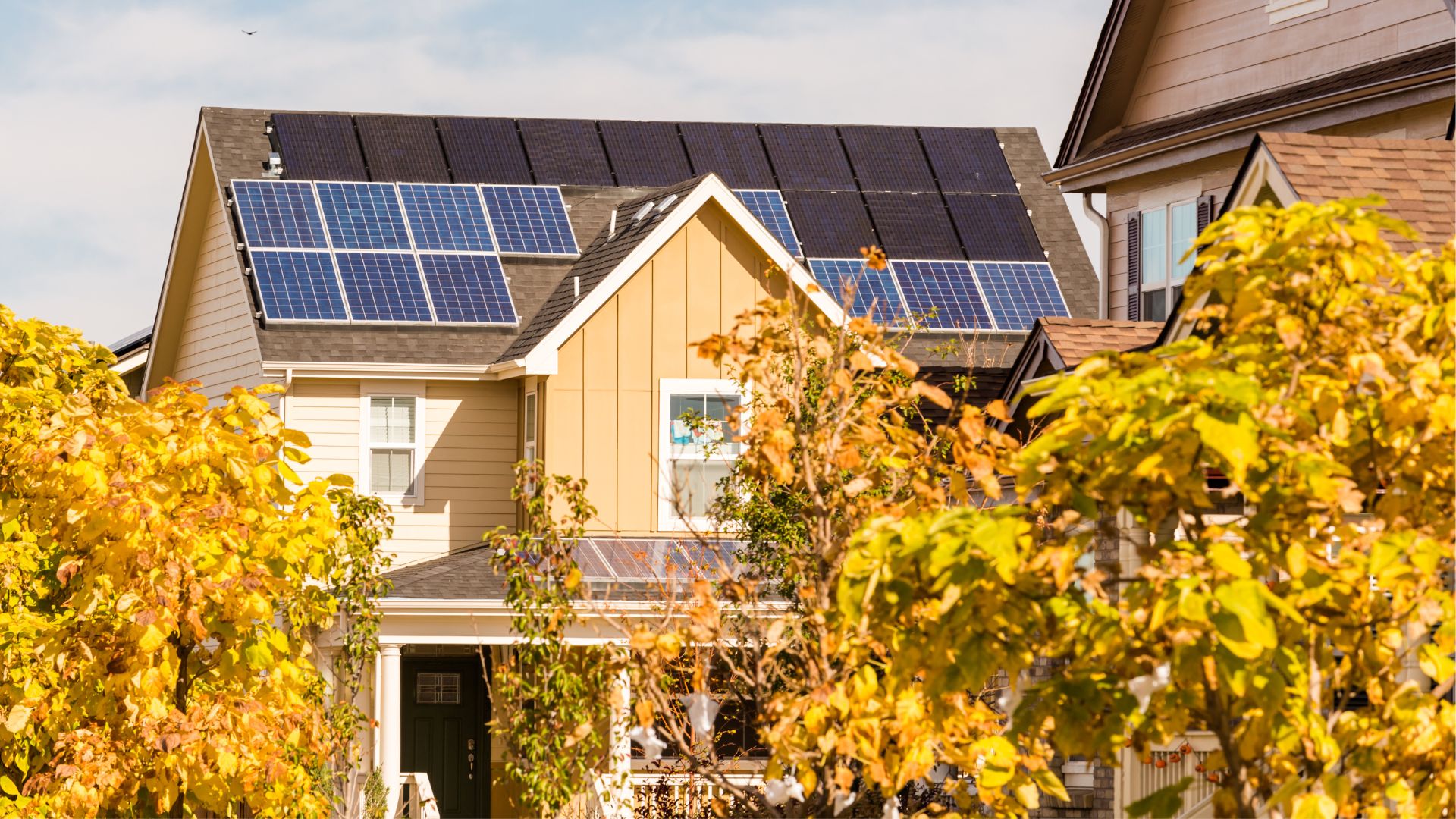
Solar energy is becoming more and more popular. Technology has improved and costs have declined. Driving through subdivisions it is amazing to see that solar panels are sprouting up everywhere. It is evident by the increased popularity that homeowners are willing to invest in sustainable and renewable energy.
Because solar is an investment and a significant decision that will impact the property for at least 25 years, it is important to understand what is involved with a solar commitment carefully. Because it is becoming more commonplace, we thought it time to shed a little info on what to consider if you are selling a home with solar technology or you are considering purchasing a home with solar technology. There are certain things you should consider.
In the HRM, the Solar City Program offers property owners in the municipality access to solar energy options, which can be financed through a solar collector account with the Halifax Regional Municipality. Property owners individually select their preferred solar energy system and service providers for assessments and installations as part of the financing program administered by the municipality. The benefits of the Solar City Program are that although homeowners can select a contractor of their choice, the solar city program ensures that the proposal for the installation meets their individual energy requirements and habits, and the solar program completes a detailed third-party review of the contractor and the system proposal. Upon completion of an installation, the Solar City program will provide a Certification of Completion which ensures that the system installed on your property meets all legislative requirements and properly suits the needs of your home.
The Solar City Program
The Solar City program involves a voluntary financing application where the property owner enters into an agreement with the municipality to access funds that offset the capital costs of installing solar energy systems on their property. The municipality places a voluntary Local Improvement Charge (LIC) on the property after the solar contractor is paid at the end of the project. The LIC is an additional annual charge and is separate from the property owner’s annual property tax bill.
One thing to note is that there are no credit checks required to confirm eligibility however, property owners must be in good financial standing with respect to property taxes, LICs, and any other relevant municipal charges.
The LIC payments are made over a period of 10 years at a fixed interest rate (4.75%) with the option for the property owner to pay the balance in full and subsequently remove the lien at any time without penalty. The charge for the solar energy system is applied to the property, not the individual. It is the property that carries the project cost. This bill is separate from your property tax bill If a property owner moves before the financing is repaid, the property owner has the choice of paying the remaining balance off in full at the point of sale, without penalty, or transferring the charge to the next property owner as long as both parties agree to the transfer.
Things to consider if you are selling a home with Solar Technology
Solar panels have a life span of approximately 25 years. It is important to take into consideration the age of your roof at the time of solar panel installation, and the estimated cost to remove and reinstall new panels at end-of-life expectancy.
If you are planning to sell your property, the following documentation should be made available to the potential buyers of your home:
- Copies of the assessment and installation costs
- the building permits
- engineering stamp of approval of structural analysis (if appropriate),
- Electrical permits
- the complete feasibility assessment from the original contractor,
- all applicable permits
- proof of final inspection which includes the HRM Solar Building Permit (if applicable)
- Some providers carry a 25-year warranty that can run either with the product or with the installation company. You should find out prior to selling if these warranties can be transferred to the new owner upon closing.
- Copies of your annual NSP costs for the past two years.
The bottom line:
The benefit to homeowners is that energy costs are reduced by appoximatly50-70%. According to Zillow, homes that have solar panels tend to have a 4.1% higher appraised value compared to homes without. This of course is an average value and will depend on certain factors such as the slope of the roof, location, and proximity to water. It was hard to find information for our local market as the technology is still relatively new. PVSC currently does not add value to a property with solar. In the short term, they don’t provide an increase in house value, with the panels often costing more than they attribute in value. The general impression however is that it does not decrease the home's value. Although, homes with solar panels on the front of the house are less appealing than homes where the solar panels cannot be seen from the street.
The solar homes have an increased EnerGuide rating and this EnerGuide Rating is displayed on the MLS® for buyers to see. To obtain an EnerGuide Rating the homeowner must complete a Home Energy Assessment through Efficiency NS.
Things to consider if you are buying a home with Solar Technology
If you are buying a property with solar technology, it is imperative that you contact your insurance provider to ensure that they will insure the property. You must search for liens on the property and inspect the meter to find out who the original installer was or hire a third-party installer to inspect the system to assess it on your behalf.
- You must collect warranty documentation from the homeowner as well as copies of all inspection permits including the HRM Solar Building Permit if possible
- You will need to review the net metering agreement with Nova Scotia Power. Of course, the purchase price on the home may include the solar enhancements or the sellers may require that the buyer take over the existing Local Improvement Charge (LIC) on the property and you will need to find out the details of these charges. Keep in mind that the charges run with the property in the form of a lien, so make sure this lien is either removed or that you are prepared to take this over.
If the property you are purchasing went through the Solar City Program, you can be assured that Solar City reviewed all applications, inspections, and permits for the installation of the system to make sure that it met all compliance requirements.
Keep in mind that although a typical system in NS covers 50-70% of the power costs, there is still a monthly base NS power charge. The documentation from the initial assessment of the system should explain the anticipated efficiency of the installation and of course, you can review the prior year's energy bills as a condition of the purchase agreement
It usually takes 10 – 12 years on average depending on the system and the rebates that were used, for a system to pay for itself. Homeowners should consider this prior to installing solar technology. But with current net metering, you are compensated for the utilities so as rates got up you are compensated. If you are not including the system paid out in full, you will need to discuss with your REALTOR® proper pricing of the property with this lien against it as well as prepare for the proper transfer of payment documentation to the new owner.
If you are unsure what Solar Energy is and what is available in HRM, I highly recommend that you visit:
To learn more about the Solar City Program: https://www.halifax.ca/home-property/solar-projects/about-solar-city
Download the Nova Scotia Go Solar Guide for information about qualified solar installers, determining if solar is right for your home, and learning about all the incentives and rebates available.
Sources:
Government of NS https://novascotia.ca/solar/
Efficiency NS https://www.efficiencyns.ca/
Assist 2 Sell, HomeWorks Realty
| Assist 2 Sell HomeWorks Realty
or another way